
I have always loved flowering plants and flowers. Whenever I visit a florist, I enjoy all the beautiful colours and shapes, and I love receiving flowering plants as gifts. 😉 They bring a sense of joy into the home and garden, and I genuinely enjoy having them around me. Yet my recent discovery has made me more aware of the difference between wild plants and flowers cultivated primarily for their ornamental value. What we find beautiful and appealing is not necessarily equally valuable to insects. This does not mean I have grown to love flowers any less, but I do look at them differently now.
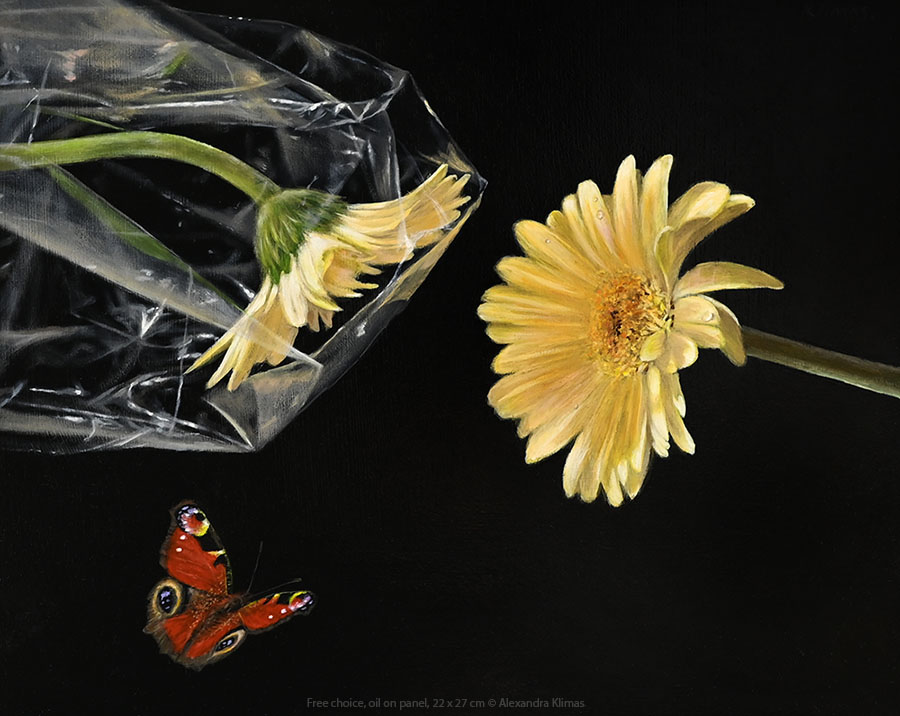
In my painting, a gerbera wrapped in plastic stands beside one that is completely unwrapped. A butterfly instinctively moves towards the unwrapped flower, drawn by its colour and the promise of nectar. But what the butterfly cannot know is that even this flower may not provide what it needs. Through selective breeding, gerberas have been developed primarily for their large blooms and ornamental appeal. As a result, they generally produce less nectar and pollen than many flowers that offer insects a more valuable source of food. Moreover, ornamental plants grown in intensive cultivation systems may contain residues of chemical pesticides that can harm insects. Plastic packaging, too, has become part of the way flowers are produced and sold.
In my painting, I explore the tension between attraction and hidden vulnerability within cultivated nature. What appears beautiful and harmless at first glance is not always as straightforward as we might think. It is precisely this contrast that fascinates me: the beauty of flowers we so love to enjoy, and the less visible consequences that may lie behind them.
Read also: The story behind ornamental plants: pansies
